Coins, Supplies, Value Guides, (affiliate partner)
2014 Penny Errors To Look For
2014 Penny Errors, Varieties, and Values
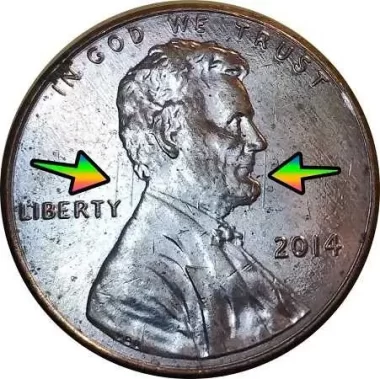
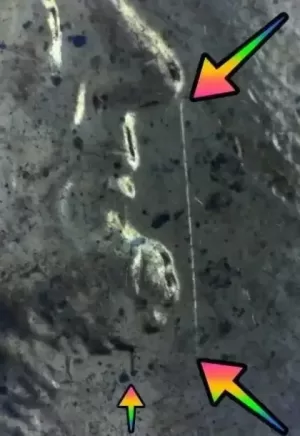
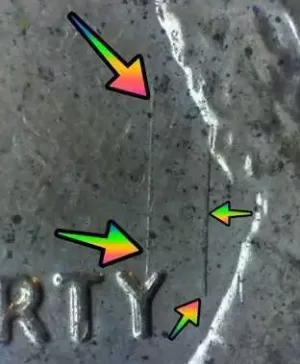
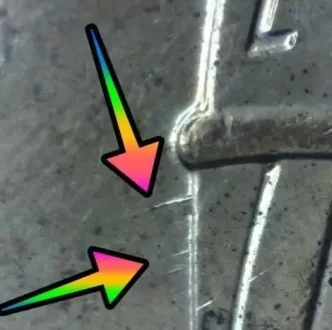
2014 penny errors and varieties are collectible coins. For instance, this 2014 penny displays a die clash error on the obverse, and a feeder finger error on the reverse of the coin.
What is a Die Clash Error?
Die clash errors like this are highly sought after collectible coins. Plus, the better the condition, the more they’re worth. A coin microscope isn’t needed to find this error.
For rare planchet errors however, like a 2014 penny struck on a foreign or dime planchet, a Weightman Digital Pocket Scale is the final word in authentication.
Is a Clashed Die Error Penny Valuable?
2014 shield cent values will vary. The value depends on the type of error or variety, the coin’s condition, and the current market rates. Clashed die shield cents value at $10 and up in just a cheap cardboard or plastic coin flip on ebay. However, shield pennies don’t have to have errors or be a variety to be valuable.
Grade (Red)
2014 (No Mint Mark)
2014-D (Denver)
MS63
$2.00
$1.50
MS65
$10.00
$8.00
MS67
$350.00
$27.00
MS69 (Record)
$1,995.00+
$2,599.00+
Values based on recent PCGS/NGC auction records for "Red" (RD) specimens.
2014 Lincoln Cent Value
For instance, a 2014 1C Shield cent graded MS69 RD, sold for nearly $2000.00. Furthermore, a 2014-D 1C Shield cent graded MS69 RD, sold for $2,599.00. These types of error pennies are the most valuable because of their flawless condition.
Most Valuable Pennies
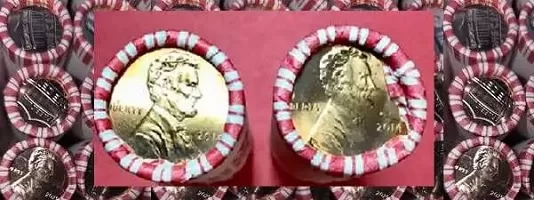
Furthermore, the best chance of finding uncirculated 2014 Lincoln cent errors is by searching through original wrapped bank rolls. Additionally, examining 2014 mint sets ensures a mint state grade proof specimen.
How Do Die Clash Coin Errors Happen?
A clashed die mark or die clash error occurs by opposing dies colliding with each other as a planchet fails to be fed into the striking chamber.
Most complete planchet misfeeds don’t result in clashed dies since dies normally don’t touch each other in the absence of a planchet. Dies operate with a safety margin referred to as minimum die clearance or minimum die distance.
Additionally, these terms refer to the closest approach the dies make in the absence of a planchet. In order for dies to clash, the dies must fall out of adjustment, making the minimum clearance zero or less than zero.- error-ref.com.
This is why die clash coin errors are rare coins. Check out a similar example listed as TDC-1c-2014-01 via maddieclashes.com
Feeder Finger Errors
A feeder finger scraping across an anvil die causes feeder finger errors. In other words, die scrapes appear on a coin as closely-spaced, parallel ridges. Some collector’s only collect coins with feeder finger errors.
Die scrapes may also appear on the hammer die. Other causes also make die scrapes, but in most cases they’re difficult to distinguish from feeder finger damage. – error-ref.com
2014 Shield Cent Doubled Dies
Furthermore, 2014 Lincoln shield cent doubled die variety examples are available with images and listed at doubleddie.com and varietyvista.com. There are so many interesting coin errors to look for! It’s a fun game of role playing a detective for the kids.
This website is a partnered associate and contains affiliate links, which enable me to earn commissions from various partners. Full disclosure is available here. Partners include ebay, Amazon, Google Adsense, and others. Check out rare 2020 Doubled Die Pennies!
MarkedMoney.Tech is led by a dedicated coin hunter with years of experience in high-volume roll searching and error identification. Having personally discovered and auctioned rare 2020-W V75 varieties, our mission is to provide collectors with technical, microscopic-level data to help them identify their own 'pocket change' treasures."
View all posts by MarkedMoney.Tech