1978 Penny Error: Clipped Planchet

1978 Penny Error: Clipped Planchet Coins

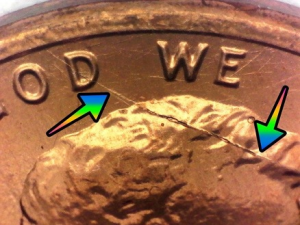
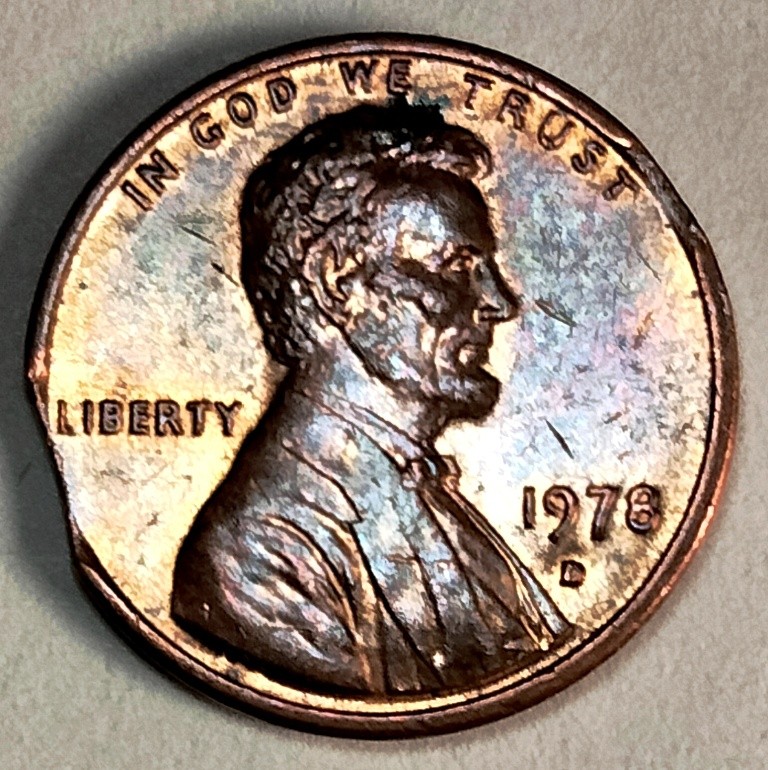
This 1978 D penny is a curved clip mint error coin, a type of numismatic error that occurs during the production of coins. 
1978 penny error

In other words, this 1978-D penny error refers to a clipped planchet, or portion of the coin’s circumference being absent. This is due to a misalignment during the blanking or cutting process.

Furthermore, the blanking process involves cutting round metal discs, called planchets from large sheets of metal. Occasionally, the cutting machine may malfunction or experience misalignment. This results in irregularly shaped planchets.  Moreover, the irregularly shaped planchet used to strike this 1978 penny, created a clipped planchet coin error.

1978 d penny
Note the Crescent-shaped Indention

Essentially, a curved clip mint error is named because a missing portion of the planchet creates a curved or crescent-shaped indentation. The location and size of the curved clip can vary, but typically affects a small segment of the coin’s circumference, as shown above.

Curved Clip Mint Error Coin Value

The value of a curved clip error coin may vary.  Moreover, it depends on several factors, such as the severity of the clip, the rarity of the coin, and the demand among collectors.  Additionally, the more pronounced and larger the curved clip, the more desirable the error coin becomes.  Had this 1978d penny been in flawless condition, it might’ve been a penny worth thousands.

clipped coin

To determine the specific worth of a curved clip mint error coin like this 1978 Lincoln cent, have it authenticated and appraised by a professional coin grading service or a reputable numismatist.  For a small fee, they’ll assess the coin’s condition, rarity, and market demand to provide a valuation estimate.

1978d penny value
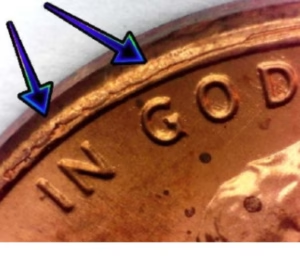
Note the Blakesley Effect

The Blakesley Effect refers to a specific type of error that can occur during the minting process of coins. It’s named after a man named Blakesley, who first described this phenomenon.


The Blakesley Effect specifically refers to the raised rim formed along the clipped edge of a coin.  A coin struck with insufficient force or misalignment, displaces the metal pushing it upward.  This causes the formation of a ridge or rim along the clipped area and a flattened area opposite the clip.

1978 lincoln penny

Coin collectors find these errors intriguing due to their unique appearance and the circumstances during minting process.  List your own mint error discoveries on eBay by observing how others have listed theirs.

coin microscopes

If you’ve found a clipped error coin you think is valuable, then consult with experts in the field to get an accurate assessment of its worth. Online coin groups such as coinauctionshelp.com are extremely valuable resources to be aware of.

This website is a partnered associate and may contain affiliate links. Full disclosure is found here.
2007 Penny Errors and Varieties

2007 Penny Errors, Varieties, and Values

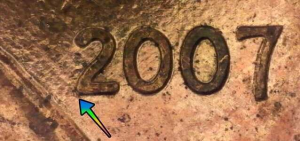
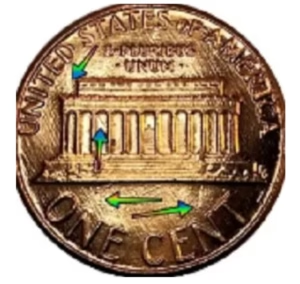
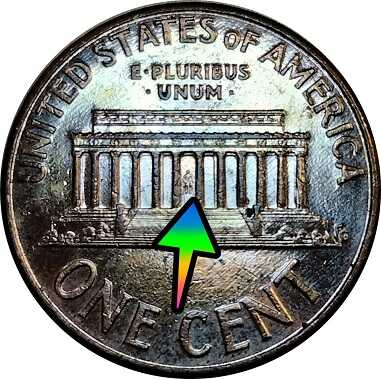
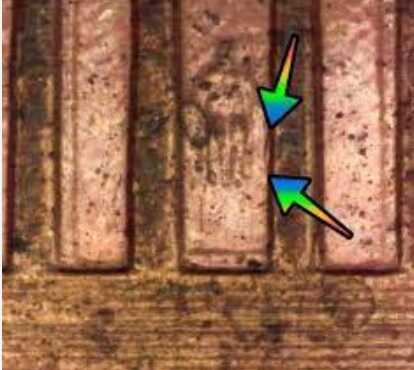
2007 penny errors  and doubled die varieties exist.  For instance, observe a 2007 doubled die reverse penny.  Arrows note the doubling displaying by a pillar.  Furthermore, doubled die is mistakenly referred to as a double die by new collectors.

2007 penny errors

Numismatics Terms

A Lincoln cent is an American penny.  In other words, using the wrong terms alerts the experienced numismatists of an inexperienced coin collector.  However, experienced numismatists get the gist of what is meant.

Furthermore, numismatic jargon helps to navigate the world of numismatics. For instance, double die pennies refer to Lincoln cent doubled dies.  Moreover, view 2007 penny doubled die listings with images to compare accessible via doubleddie.com

2007 pennies

Additionally, coppercoins.com documents images and price guides for varieties in various grades.  Furthermore, doubled dies sell for five dollars or more in raw condition via eBayDoubled die pennies sell for thousands of dollars in some cases.

2007 Penny Value

Moreover, 2007 pennies don’t have to be mint errors to be valuable.  For instance, a 2007 cent graded MS67RD, sold for $230.00.  Additionally, a 2007 D cent graded MS67RD, sold for $431.00.  Furthermore, a 2007 S cent graded PR68DCAM, sold for $230.00.  

Satin Finish Penny Value

Satin Finish is a type of finish the United States Mint produced for collectors.  In other words, they shouldn’t be in circulation.  Furthermore, NIFC means Not Issued For Circulation. 

penny error list

Moreover,  Satin Finish coins are limited, more scarce, and therefore incredibly valuable.  For instance,  a 2007-D 1C Satin Finish graded SP69 sold for $403.00.  Moreover, a 2007 one cent Satin Finish graded SP69 sold for $253.00. 

How to Find Flawless Coins

Moreover, Lincoln cents are valuable in pristine condition.  Furthermore, the best chance of finding a 2007 penny doubled die once cent worth money in flawless condition, is to search through uncirculated original bank wrapped rolls.  Additionally, examining 2007 mint sets increases the chance of finding a mint state grade proof coin specimen.

2007 Penny Errors
2007 penny

Looking for more? Check out the Rare Penny Errors Master List for a complete list of other year penny error guides featured on this site.

This website is a partnered associate and contains affiliate links.  Full disclosure is available here.  Partners include ebay, Amazon, Google Adsense, and others.

1983 Penny Errors and Varieties

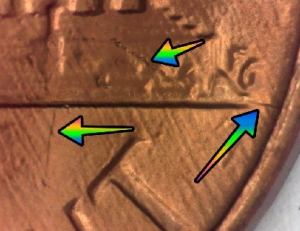
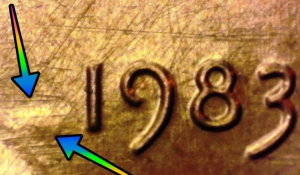
macro image of the reverse of a 1983 penny with arrows noting a die clash error

1983 Penny Errors, Varieties, and Values

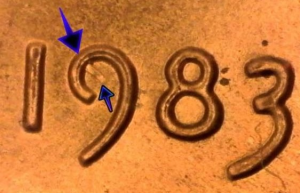
1983 penny errors and varieties exist and are worth more than their face value. For instance, 1983 penny errors are $5 and up in raw condition on eBay.

1983 Lincoln Cent Value Chart Updated 2026 Values

Mint Mark / VarietyCirculated (AU)Mint State (MS65)Auction Record (MS67+)
1983-P (Zinc)Face Value$1 - $3$550
1983-P Doubled Die Reverse$150 - $250$450 - $600$7,000+
1983-D (Denver)Face Value$2 - $5$400
1983-S ProofN/A$5 - $10 (PR69)$125 (PR70 DCAM)
1983 Copper Cent Error (3.11g)$5,000+$15,000+$23,500+

*Values are 2026 estimates based on recent PCGS/NGC auction data. High-grade records often require "Red" (RD) designation.

Additionally , a 1983 one cent coin in raw condition refers to an ungraded or unencapsulated coin.  Moreover, values vary and depend on the eye appeal of the coin, not necessarily its holder.  However, the holder makes it possible to cosign with  auction companies.

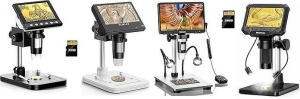
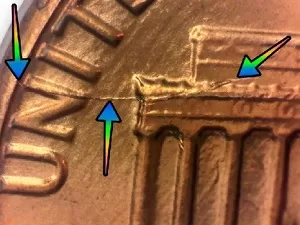
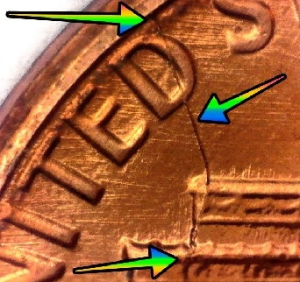
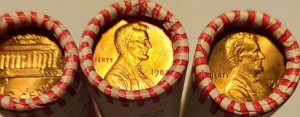
Note the die markings on 1983 pennies.  This entire roll of preserved pennies displayed a die clash error, rim cuds, and reverse die cracks.  I took the time to place each one cent coin under a coin microscope so that I could note any errors or varieties I found while coin roll hunting.

Finding Flawless 1983 Pennies

However, one cent coins don’t require being of any varieties or have any errors in order to be more valuable.  In other words, a Lincoln penny in pristine condition is worth much more than one cent.  For instance, a 1983 Lincoln Memorial Cent graded MS68, sold for $1840.00.

Additionally, only two 1983 Lincoln cents in population are graded MS68+.   Moreover, they’re valued at $5000.00 each.  A 1983 D Lincoln Cent graded MS68, sold for $1380.00

1983 Lincoln Cent Doubled Dies

A 1983 doubled die variety penny with the highest grade instantly makes it very valuable.  For instance, an uncirculated 1983 1C Doubled Die Reverse Lincoln cent graded MS68RD, sold for $7050.00.  Being a doubled die variety coin implies a lower population, and in pristine condition it’s even rarer.  Appeal impacts value.

Moreover, eye appeal increases value.  For instance, a 1983 1C Doubled Die Reverse Lincoln Cent graded MS64BN, sold for $495.00.  Note the doubling spotted easily with the naked eye.  At first the letters look blurry from a distance, like blurred vision, but it’s actually doubling of the coin.

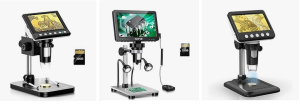
However, the doubling is more evident when looked at with a 10X loupe or placed under a USB coin microscope. Graded specimens have asking prices of hundreds of dollars on eBay. Furthermore, A 1983 Lincoln Cent Doubled Die Obverse graded MS65RD, sold for $440.00.

How to Find Rare 1983 Pennies

The best ways to find a rare and valuable penny worth money is to invest in uncirculated original wrapped pennies by the rolls, and search through them.   They’re found in pocket change just as well.   

Another option is to purchase 1983 mint sets and then examine all the coins in it.  Don’t break it out of the original mint set unless you think it’s absolutely worth doing so.  Send the whole set off to be graded by reputable grading companies, namely NGC or ANACS.

Struck Through Errors

1983 Lincoln cent struck through errors are worth around five dollars and up according to the eBay sold listings. The better the condition of the coin, the more its potential worth. 

Wrong Planchet Errors

Wrong planchet error coins make 1983 pennies worth a lot of money. Furthermore, a small scale is all you need to know, as a 1983 copper penny weighs 3.1 grams.   You’ll need a coin scale to verify weight.

Anything more or less could be a wrong planchet error coin.  Zinc coins only weigh 2.6 grams.  Unplated coins may weigh less than that.  For instance, check out an examination of a 2019 planchet coin plating error penny. 

1983 Lincoln Cent Coin Collecting Tips

The 1983 penny is renowned for its numerous error variations. Moreover, 1983 marked the transition from copper to copper-plated zinc composition, leading to a variety of striking errors. 

For instance, some 1983 pennies were struck on copper planchets instead of the intended copper-plated zinc. These are highly valuable due to their rarity.  Check out these rare Bicentennial Quarters next.

This website is a partnered associate and contains affiliate links, which enable me to earn commissions from various partners. Full disclosure is available here. Partners include ebay, Amazon, Google Adsense, and others.

Looking for more? Check out the Rare Penny Errors Master List for a complete list of other year penny error guides featured on this site.