Bicentennial Half Dollar Errors

Bicentennial Half Dollar Errors and Varieties

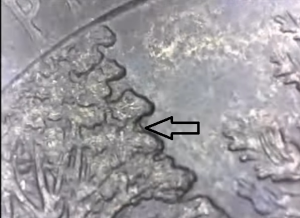
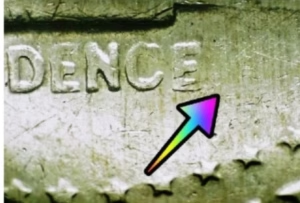
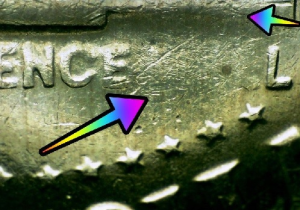
microscopic image with arrows pointing at a kennedy half dollar error coin

Bicentennial half dollar errors and varieties are collectible coins.

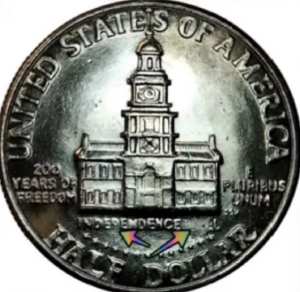
Check out this 1976 to 1976 Kennedy half dollar displaying a struck through grease error on the reverse of this 1976 half dollar error.

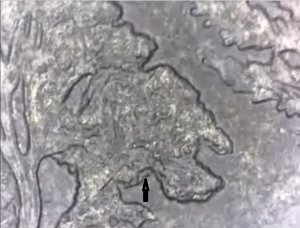
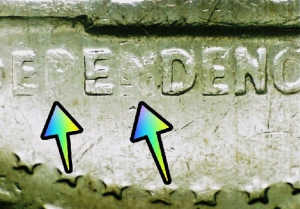
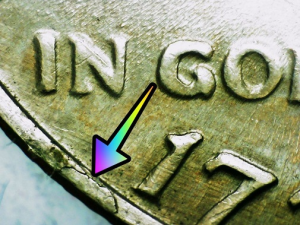
microscopic image of bicentennial half dollar errors noted with arrows on a 1976 half dollar coin

Collectible Half Dollar Errors

See how some or all of the letters of Independence Hall are missing on the reverse. 

In addition to being a unique grease strike error coin; Independence Hall coins are one year type collectible 1976 half dollars.

Silver VS Clad Bicentennials

Don’t forget to check the edges, because a scarce variety was struck in silver too! 

A standard clad Bicentennial half weighs 11.34 grams, while the rare 40% Silver version weighs 11.50 grams. Some Kennedy half dollars are extremely valuable.
Kennedy Half Dollar Errors

An over-polished die causes the devices to disappear on this bicentennial coins. 

Rare coin collectors will bid on the finest Bicentennial half dollars to add to their private collections. 

Kennedy half dollar errors and varieties add uniqueness to any collection. 

Bicentennial errors in mint state condition obtain the most value over time by having the highest grade of the lowest population of graded coins. 

You’ll need to search through uncirculated Kennedy Half Dollar rolls to increase the chance of locating one.
Rarest Kennedy Half Dollars

According to error coin collector enthusiasts and numismatists, a ten plus percent misaligned die is a great error on any denomination, and almost unheard of on a bicentennial half dollar.

However, it does happen and even a minor example error coin is still a rare collectible.

Misaligned die errors occur when the anvil usually the reverse die stays in its proper orientation but the upper hammer die becomes misaligned.
The result is that the obverse appears to be off center and it is not until you flip the coin over and see that the reverse is still centered that it was struck by a misaligned die”. – numismaticsnews.net

1776 to 1976 Bicentennial Half Dollar Value

Half dollar variety and error coins are valuable. However, these coins in pristine condition are highly collectible. 

For instance, a 1976 50C half dollar coin graded MS64, sold for $3,105.00.
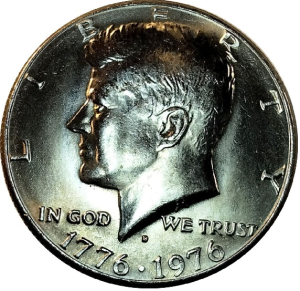
Furthermore, a 1976 D 50C Kennedy half dollar coin graded MS67+, sold for $10,000.00.

Moreover, a 1976-S Kennedy bicentennial coin graded PR67, sold for $1,100.00.
Please do make sure to meet all buyers at a police or law enforcement station for added safety in making any exchanges at physical locations.   

Furthermore, consider the great potential gained by networking.  Meaning, consign with a licensed coin auction house. 

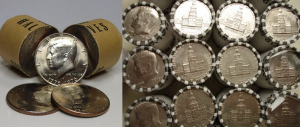
Click on the Bicentennial Half Dollars in the image below to see more half dollar errors for sale on ebay.com
In addition, join cointalk.com,  where you can find help with attribution. 

 There are numerous coin groups on Reddit and Facebook too.  Simply search for them on all platforms with the appropriate phrases such as most valuable Bicentennial half dollars.  Happy hunting! 
Finally, keep an eye on recent sold listings of bicentennial Kennedy half dollar error coin listings in raw condition via eBay
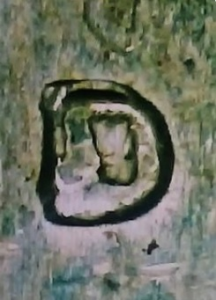
microscopic image of a repunched Denver mint mark

This will give you an idea of current market value. This website is a partnered associate and contains affiliate links. Full disclosure is available here.
1976 Bicentennial Half Dollar Coin Error List

2018 Michigan Quarter Errors

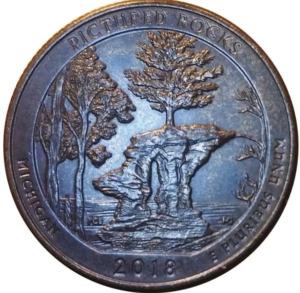
2018 Michigan Pictures Rocks Quarter Errors with pictures

2018 Michigan Quarter Error Pictured Rocks Black Beauty

2018 Michigan quarter errors and varieties are collectible coins. 

For instance, this 2018 Michigan BLACK BEAUTY quarter displays an improperly annealed planchet error.

A coin loupe will help you determine it’s not just a dirty or damaged coin.

Pictured Rocks Black Beauty Michigan 2018 Quarter

For instance, I almost mistook 2018 Michigan quarter errors for an environmentally damaged coin, as did a few others presume. 

However, further examination confirmed this 2018 quarter is indeed a black beauty error quarter.

I learned after scouring the web for articles and visual examples and sought out advice for how to appropriately identify the error.  

Additionally, to understand a mint error like this, it’s important to understand how the coin production process works.

Pictured Rocks Black Beauty Michigan 2018 Quarter Filled P Error

The Annealing Process

Coins start out as blanks.  First, blanks are first cut from metal coils and then sent to an annealing furnace. 

Then, from the furnace they go to a cooling water bath, followed by a polishing/brightening rinse.

Finally, drying machines help shine and burnish each piece.” – coinweek.com

The annealing process softens the metal to prepare it for striking.  Blank planchets are placed in an annealing furnace that first heats, and then slowly cools the metal. – numismatics.

How to tell Environmental Damage from an Annealing Error

“To tell the difference between an annealing error, (which happens before striking,) and environmental damage, (which happens after striking), pay attention to the luster of the coin.

Pictured Rocks Black Beauty Michigan 2018 Quarter doubled die reverse with arrow noting doubling of coin

2018 National Park Improperly Annealed Quarter Errors and Varieties

“The copper core (reeding) shows a nice normal red copper color.  Furthermore, the planchet displays as darker coloring remaining on the smooth edge of the reeding after the planchet is struck in the collar. 

2018 Pictured Rocks Michigan National Park Quarter Error List Black Beauty Coin up close

However, when a coin is ejected from the collar, the darker coloring is removed from the ridged reeding.  The reeding as a normal red copper color is one of the key identifiers to know,” it’s legit.– Fred Weinberg – cointalk.com

Pictured Rocks Black Beauty Michigan 2018 Quarter doubled die reverse error noted with arrow

Furthermore, the colors most associated with improperly annealed planchet errors are “copper, red, black, brown, and gray.  Coverage can be complete or incomplete.” – error-ref.com

2018 Michigan Quarter Improperly Annealed Planchet Error Values

Improperly annealed planchet error values depends on a few factors.  They’ve sold between $5 and $20 in raw condition on ebay.  This type of mint error can have asking prices higher than a hundred dollars, if it’s been properly authenticated.

2018 Michigan Pictured Rocks Quarter: Improperly Annealed (Sintered) Planchet Error Value Chart

Condition / GradeEstimated Value (USD)Key Identifiers
Average Circulated$5.00 – $10.00Visible "sintered" copper-wash; often mistaken for dirt.
Fine to Very Fine$10.00 – $25.00"Black Beauty" or orange/copper toning; clear luster.
About Uncirculated (AU)$25.00 – $50.00Minimal wear; silver-gray or deep copper finish is prominent.
Mint State (Raw)$50.00 – $75.00High eye appeal; consistent toning across the whole planchet.
Certified/Graded (MS65+)$100.00 – $250.00+Professionally authenticated as "Improperly Annealed."

*Values based on recent eBay/auction data. High-intensity errors or rare color variants may command higher premiums.

Click the image of the woman wearing it, or get the Coin Hunter  T-shirt hereA 2003 P Illinois State Quarter improperly annealed sintered planchet error, sold at auction via Great Collections for nearly $20.  A 2002 P Mississippi State Quarter Improperly Annealed Sintered Planchet, sold at auction via Great Collections for just $16.00.

The return of investment doesn’t appear worth sending a quarter with an annealing error in for grading.  Demand isn’t high for this type of error, so if you find one you’ll profit more by selling it in raw condition. One in this condition though, is best sent off for grading and auction. 

2018 Michigan Pictured Rocks Quarter Error

Examine pocket change carefully!  This camouflage colored 2018 P Michigan Pictured Rocks quarter with an improperly annealed planchet appeared to be a dirty coin, but rather is actually a rare mint error. 

A sight to see for rare niche error coin collectors!  Check out more featured quarter errors listed in this coin roll hunting guide.

The copper reeding on the coin wouldn’t be its natural color, and the quarter would be lacking its luster if it was just a normal dirty coin.  In other words, you have to look beyond the camouflage! A flawless coin has no nicks.

Coin Roll Hunting Rare Plating Error Coins

Furthermore, I once found what appeared as a 2019 silver painted penny that turned out to be a partial plating error! 

I’ve learned a lot about coin production from the United States Mint channel. 

This website is a partnered associate and contains affiliate links, which enable me to earn commissions from various partners.

Full disclosure is available here.  Partners include ebay, Amazon, Google Adsense, and others.
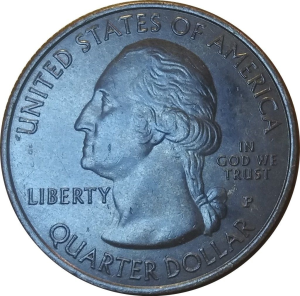
1964 Quarter Errors and Varieties

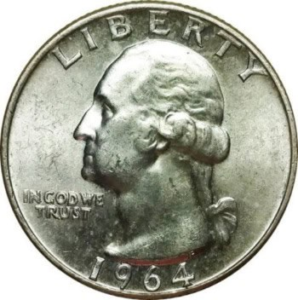
1964 silver quarter errors

1964 Quarter Errors, Varieties, and Values

1964 silver quarter errors and varieties are rare collectable coins of value.

Scroll to the bottom to see the 1964 quarter error and variety value chart.

However, no one knows exactly how many 1964  quarter errors with the reverse of 1965 quarter, or if the 1964 quarter transition errors were struck. Be on the hunt for a rare 1964 quarter error! 

Valuable 1964 silver quarter coins are still being found in bank rolls, they do create additional value, and you’ll find the tools below needed to help you find them.  Keep scrolling!

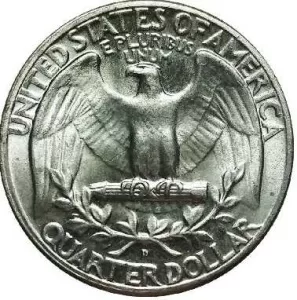
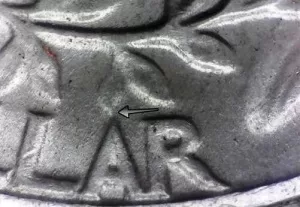
macro image of a silver 1964 quarter reverse

These are very valuable silver American quarters and not a lot of people know it.  Keep scrolling to learn about the 1964 quarter value, variety types, and which one is the rarest.

Rare 1964 Quarters

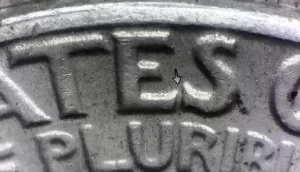
Called the Type C Reverse, or (RDV-003,) these 90 percent silver coins display crisp feather detail on the eagle. 

They also show close spacing between the E and the S of States, and a serif on the top-right of the N in UNUM.  You’ll need a loupe to see the difference.  I used a Carson zOrb coin microscope to capture these images.

1964 quarter worth money

The design change was initiated to accommodate striking 1965 Washington quarter dollars on a copper-nickel clad planchet. 

A 1964 silver quarter weighs 6.25 grams, and a 1965 clad quarter weighs 5.67 grams. Look at the rim and weigh your 1965 quarters with a coin scale.

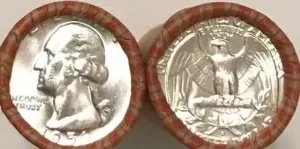
image of two rolls of silver quarters

Some 1965 silver quarters are extremely valuable for this mix up also. 

For instance, coin dies intended to strike copper-nickel clad coins were instead impressed with a D Mint mark and used to strike silver counterparts.– coinworld.com. 

1964 us quarter value

Transitional 1964 Quarter Error

Three transitional reverse styles exist among 1964 silver quarters.  They are the Type A (normal), Type B (meant for proof dies), and Type C (meant for use in 1965). – error-ref.com.  

Look for Transitional 1965 Quarter Errors

Type C is the only transitional reverse error.  Use a Digital Pocket Scale (0.01g) to verify the standard weight of 5.67g (clad) vs. the rare 6.25 grams.

Remember to check any 1965 quarters if you suspect it might be silver.  The edge test is helpful, (no copper showing,) but the coin scale verifies.

microscopic image of die lines on a silver 1964 American quarter.
Valuable Silver Quarters

The final year Washington quarters were produced with 90% silver was in 1964. 

While searching through 1964 and 1965 quarters for silver coins, you should also check your 1776-1976 Bicentennial quarters for the rare 40% silver varieties. These are rarity coins.
 

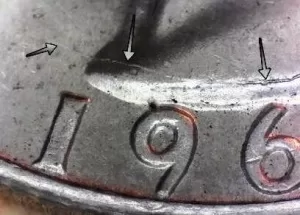
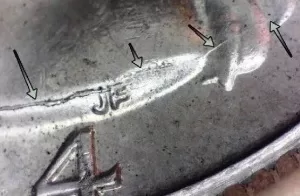
microscopic image of the 1964 date on the obverse of a silver quarter with arrows noting the die break on the error coin
1964 Quarter Value

A 1964-D 25C Type C Rev FS-901 graded MS66, sold for $2350.00.

A 1965 Washington quarter Struck on 90% Silver Planchet graded AU53, with a price of more than $6,000.00!

microscopic image of 1964 date on the obverse of a silver quarter with arrows noting the die break on the error coin
Type C is the Rarest 1964 Quarter

The 1964-D Type C die variety is scarce, therefore even the lowest grades have higher premiums, but all 1964 quarters, regardless of grade, are worth more than face value due to their silver metal content. 

Check out this list of more valuable silver coins!

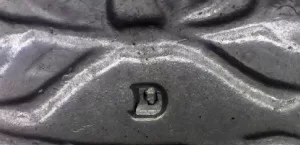
1964-D RPM D/D RPM Quarter

A repunched mint mark occurs when the letter punch used to punch the mint mark into the die leaves two or more offset impressions, causing an overlap. 

However, RPM quarters with a completely separate secondary mint mark is a rarity. – ERROR-REF

Compare to multiple images of a 1964-D  Washington quarter RPM  D/D Mint mark variety. 

There are many and you’ll need a coin loupe to see this error.  Such errors and varieties increase the value of 1964 quarters.

Silver Coin Errors and Varieties

Die cracks and chips are common on coins, and those markings are how varieties get their name.  For instance, the bird with the twig quarter is formed by a die gouge. 

Silver coins are no exception.  Bookmark this silver coin error list for future reference.

Die markings are useful for determining the age or stage of a die. 

Die cracks and breaks that earn nicknames become highly sought afterwards.   This makes the 1964 us quarter worth money.

If you’re internet savvy, then observe how others list their coins on ebay.

Get an idea for how to list yours, but if you’re not comfortable listing for yourself, then got to a local coin shop or dealer to appraise your coin and possibly consign with.  Some coin dealers are licensed auctioneers.

This website is a partnered associate and contains affiliate links, which enable me to earn commissions from various partners.

Full disclosure is available here.  Partners include ebay, Amazon, Google Adsense, and others.
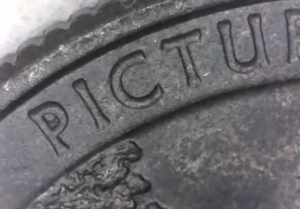
1964 Washington Quarter Error and Value Chart

1964 Washington Quarter: Error and Value Guide

The 1964 Washington Quarter is highly popular due to it being the final year of 90% silver composition for circulating quarters. Below are notable errors and varieties.

Error / VarietyDescriptionEstimated Value Range
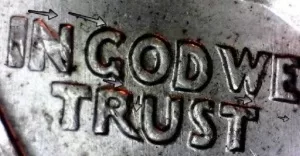
Double Die Obverse (DDO)Visible doubling on "IN GOD WE TRUST" or date.$50 - $500+
Repunched Mint Mark (RPM)D mint mark punched multiple times.$20 - $100
Off-Center StrikeThe planchet was not centered when struck.$30 - $300
Clipped PlanchetA piece of the edge is missing.$20 - $150
Filled DieMint mark or letters appear "filled" or missing.$5 - $50

Note: Values are highly dependent on the grade (condition) of the coin and market demand. Always consult a professional appraiser for specific high-value items.